
-
View Larger Image
Can Static Electricity Damage Hair or Mainly Change Manageability?
Direct answer: Static electricity mainly changes how hair fibers move, separate, cling, and respond to grooming. It can make hair harder to manage and may encourage extra friction, repeated brushing, or rough handling that contributes to breakage in already weathered hair. Static charge itself is not evidence that follicles are damaged, that hair growth has stopped, or that a person has a medical hair-loss condition.
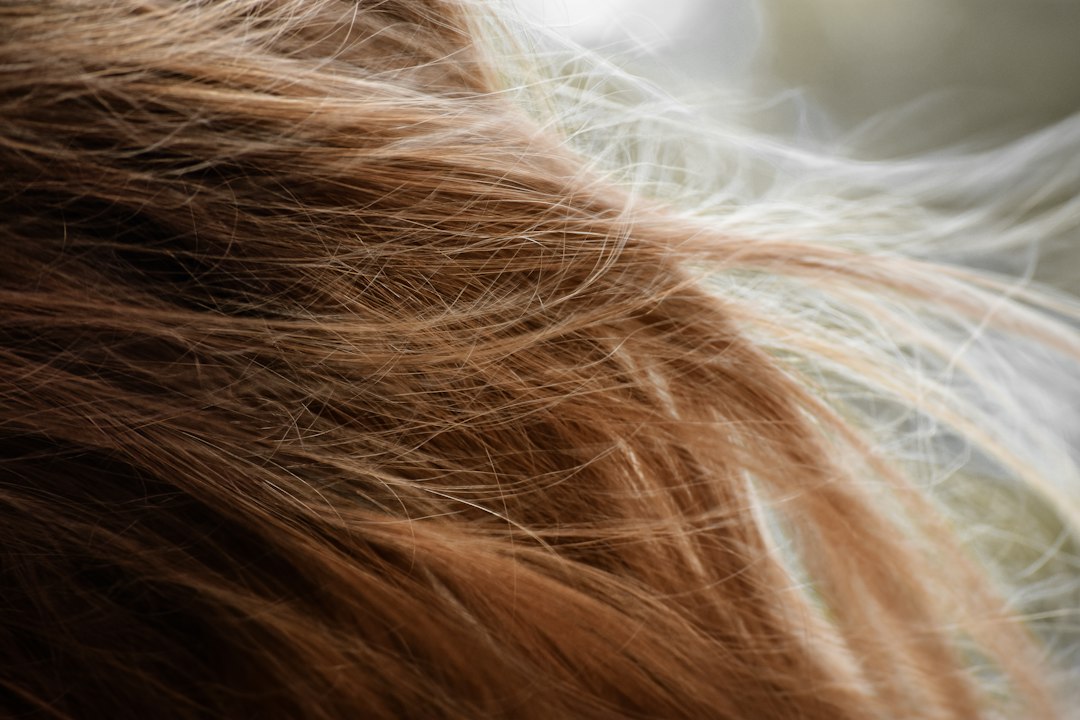
Hair can gain or lose electrical charge when it contacts and separates from another material. A plastic comb, hat lining, sweater, pillowcase, balloon, or even another hair fiber can participate. The familiar flyaway effect occurs when similarly charged fibers repel one another. A charged fiber can also cling to a surface with an opposite charge.
What static electricity is doing to hair
Hair is a poor electrical conductor when dry. Charge can remain on its surface after contact and separation, a process commonly called triboelectric charging. The amount and persistence of charge depend on the materials, the condition of the fiber, the force and repetition of contact, temperature, and moisture in the environment.
A human-hair study using Kelvin probe microscopy measured surface-potential changes after rubbing and physical wear. The researchers compared undamaged, chemically damaged, mechanically damaged, and conditioned fibers. Their work supports the practical observation that surface condition and conditioning affect charge behavior. See Effect of physical wear and triboelectric interaction on surface charge.
A related nanoscale study examined how rubbing load changed charging on human hair. It reinforces that static behavior is not simply an on-or-off property. Contact conditions matter. See Effect of rubbing load on nanoscale charging characteristics of human hair.
Static, friction, and damage are related but not identical
Three different ideas are often blended together:
- Static charge describes an electrical imbalance on or near the fiber surface.
- Friction describes resistance when fibers or materials slide against one another.
- Structural damage describes physical or chemical change to the cuticle, cortex, or fiber integrity.
They can interact. A rough, weathered surface can create more difficult fiber-to-fiber contact. Static can make fibers separate or cling, leading someone to brush repeatedly, pull against clothing, or use more heat. Those responses can increase mechanical wear. But a flyaway appearance does not prove that a fiber has split, and a split end does not require visible static.
A recent review of human-hair tribology explains that friction tends to rise as hair weathers and loses portions of its protective surface lipid layer. Bleaching, coloring, heat, and mechanical grooming can accelerate surface change. Conditioners can temporarily reduce friction by depositing lubricating materials. See Understanding and controlling the friction of human hair.
Why damaged or chemically treated hair may behave differently
Bleaching, permanent coloring, chemical straightening, repeated heat, sunlight, and grooming can change the hair surface. That does not mean every treated fiber will develop dramatic static, but it means the electrical and frictional behavior of treated hair may differ from virgin hair.
Electrostatic force microscopy has been used to compare surface charge density in virgin hair, bleached hair, and fibers treated with a cationic polymer. The method showed differences in surface charge and how the polymer distributed on the fiber. See Charge density alterations in human hair fibers.
Cationic ingredients are positively charged and are often used in conditioners because damaged hair surfaces can carry sites that attract them. This does not mean any product with the word ionic repairs hair biologically. Conditioning is primarily a surface-management strategy. It can improve lubrication, combing, feel, and charge control, but it does not restore a weathered fiber to the state it had when it first emerged from the scalp.
Why dry indoor air can make static more noticeable
Static complaints often increase during heating season. Low relative humidity allows charge on insulating surfaces to persist longer. Moisture films on many materials increase surface conductivity and help charge dissipate. A National Bureau of Standards publication explains that the benefit of humidity comes mainly from moisture adsorbed on surfaces, not because humid air suddenly becomes a strong conductor. See NIST Circular 438 on static electricity.
Modern triboelectric research also shows that humidity can change how charge carriers behave on surfaces. That physics is complex, and results from model polymers should not be turned into a precise hair-care percentage. The practical point is narrower: environmental moisture affects how long static charge persists. See Humidity transforms immobile surface charges into mobile charges.
Very high indoor humidity is not automatically better. It may be uncomfortable, contribute to building moisture problems, and change how some hairstyles respond. Hair care should not replace appropriate indoor-air management.
Does static electricity cause hair loss?
There is no good basis for treating ordinary flyaway static as a cause of androgenetic alopecia, alopecia areata, scarring alopecia, or a change in follicle cycling. Those are follicle and scalp questions. Static is primarily a fiber-surface and environmental behavior.
Hair on a brush can still come from several sources:
- Normal shedding from the root
- Breakage somewhere along the shaft
- Previously shed hairs released during detangling
- Fibers pulled from extensions or a hair-replacement unit
Static may make grooming more awkward, but appearance alone cannot identify which process occurred. A full-length hair with a club-shaped root is different from a short broken fragment. Even that observation is not a medical diagnosis.
A low-friction routine for static-prone hair
- Reduce unnecessary contact. Repeatedly dragging a plastic comb, synthetic scarf, or rough sweater across dry hair can add charge and friction.
- Add compatible conditioning. Use a rinse-out or leave-in product suited to the hair, color history, extensions, or replacement unit. Apply only where supported.
- Detangle in sections. Support the length and begin at the ends. Use the tool and technique appropriate for the texture rather than increasing force.
- Choose smoother contact surfaces. Check hat linings, scarves, collars, bedding, and upholstery for rough seams and snagging.
- Use heat thoughtfully. More heat does not neutralize damage. Follow the tool and product instructions, use controlled settings, and stop when hair becomes unusually dry, brittle, or difficult to comb.
- Manage the room, not just the hair. If the building is extremely dry, use safe HVAC and humidification practices. Do not place a portable humidifier where it can wet electrical equipment or create sanitation problems.
- Clean tools appropriately. Product film, dust, and rough damage on combs or brushes can change grooming friction. Process tools using their supported method.
What about dryer sheets, metal combs, and anti-static sprays?
Dryer sheets
A laundry product is formulated and labeled for its intended use, not necessarily for direct contact with hair or scalp. Fragrance, residues, or other ingredients may irritate skin or interfere with color, attachment materials, or a hair-replacement base. A viral shortcut is not a compatibility test.
Metal combs
A conductive tool may allow charge to move differently, but the material alone does not make a damaged, sharp, or dirty comb safe. Tooth seams, spacing, edge finish, grounding, technique, and the environment still matter. Never use a conductive tool near energized equipment or in a wet electrical setting.
Anti-static hair products
These may use conditioning polymers, silicones, oils, humectants, or other ingredients to change lubrication and charge behavior. Read the directions and consider the actual hair and service. A product that improves natural-hair manageability may be unsuitable for a bonded system, extension attachment, synthetic fiber, or freshly colored hair.
Guidance for curly, coily, fine, gray, and color-treated hair
Texture labels do not determine health. Curly and coily fibers have bends that affect contact and grooming, so rough attempts to flatten flyaways may create more breakage than the static itself. Fine hair can be easily weighed down by heavy products. Gray hair varies widely in diameter, surface condition, and manageability. Color-treated and lightened hair may need lower-friction handling because prior chemistry has altered the surface.
The useful response is individualized observation: where does the hair cling, what material was contacted, what is the humidity, how does the fiber feel, and what previous services are present? Do not turn static into a one-product diagnosis.
Wigs, toppers, extensions, and hair systems
Human-hair and synthetic units can both show static, but their supported care can differ. A product safe for natural human hair may coat a synthetic fiber, loosen an attachment, stain a base, or change the finish. Follow the manufacturer or professional care plan.
- Support the unit during detangling so clips, knots, wefts, and bonded areas are not loaded.
- Keep sprays away from adhesive zones unless the attachment manufacturer supports them.
- Test products on a hidden fiber section or sacrificial sample when permitted.
- Check clothing, chair backs, headrests, and storage bags for repeated friction points.
- Do not interpret added shedding from a unit as a scalp condition.
Common myths
“Static means the hair is dehydrated.”
Static is influenced by humidity, fiber condition, contact materials, and grooming. The word dehydrated is often used loosely for hair. Hair can feel rough or have altered water behavior, but static does not measure body hydration or diagnose a moisture deficiency.
“Static permanently destroys the follicle.”
Ordinary hair static acts on exposed fibers and nearby materials. It is not evidence of follicle destruction.
“More oil always solves static.”
Some oils reduce friction on some hair, but excess product can cause buildup, interfere with attachment, or weigh down fine hair. Product choice and dose matter.
“A spark from clothing means the hair is burned.”
A small static discharge can be startling, but it does not automatically mean the hair fiber was thermally burned. A visible burn, smoke, persistent odor, skin pain, or damage near equipment requires a different safety response.
When to seek professional or medical help
Consult a stylist or hair-replacement professional when static accompanies severe tangling, repeated breakage, color change, extension slippage, base distortion, or a sudden change after a chemical service. Stop home experimentation if the hair becomes gummy, unusually elastic, or breaks with minimal handling.
Seek appropriate medical evaluation for scalp burning, rash, sores, pain, sudden or patchy shedding, or a visible loss of density. Static management does not diagnose or treat those conditions.
Frequently asked questions
Is static worse with plastic combs?
Plastic can participate strongly in contact charging with hair, but the result depends on the specific plastic, hair condition, humidity, and technique. A smooth, clean, compatible tool used gently is more important than a simple material label.
Can water remove static?
Moisture can help charge dissipate, but repeatedly wetting hair is not a complete care plan. Water also swells hair and can increase grooming vulnerability. Use a compatible conditioning and handling routine.
Does ion technology in a dryer prevent damage?
An ion feature may change static and drying behavior, but it does not make unlimited heat safe. Temperature, distance, airflow, exposure time, prior damage, and technique still control risk.
Why does my hair become static after removing a hat?
Contact and separation between hair and the lining can transfer charge. Friction, dry air, and the lining material can intensify the effect.
The bottom line
Static electricity is a surface-charge problem that mainly affects appearance and manageability. It can indirectly contribute to mechanical wear when it triggers repeated brushing, pulling, or high-heat correction, especially on weathered hair. The safest response is to reduce friction, use compatible conditioning, manage dry indoor conditions responsibly, inspect contact materials, and separate fiber breakage from true shedding or follicle disease.
For practical care methods, browse Tips & Tricks. Professionals can explore THS education, and consumers can use the salon directory.
Share This Story, Choose Your Platform!
Related Posts
Can Scalp Massage Increase Hair Growth? What the Evidence Actually Shows
Gallery
Can Scalp Massage Increase Hair Growth? What the Evidence Actually Shows

Does Swimming Pool Chlorine Damage Hair? What It Changes and How to Reduce Exposure
Gallery
Does Swimming Pool Chlorine Damage Hair? What It Changes and How to Reduce Exposure
Can Menopause Change Hair Texture as Well as Density?
Gallery
Can Menopause Change Hair Texture as Well as Density?

Can Hair Oils Reduce Fiber Damage Without Increasing Hair Growth?
Gallery
Can Hair Oils Reduce Fiber Damage Without Increasing Hair Growth?