
-
View Larger Image
Does Swimming Pool Chlorine Damage Hair? What It Changes and How to Reduce Exposure
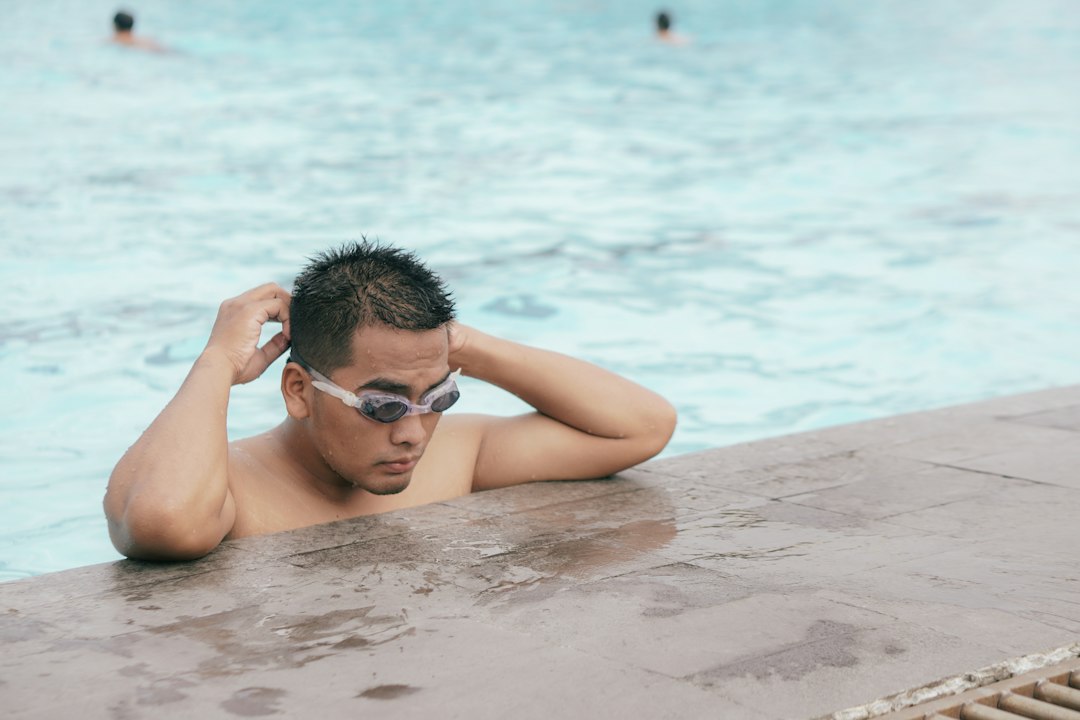
Direct answer: Repeated swimming-pool exposure can change the hair fiber, especially when hair is already weathered, lightened, dyed, or mechanically stressed. Water swelling, friction, oxidizing pool chemistry, sunlight, and grooming after swimming can act together. That can mean rougher feel, more tangling, color shift, or breakage. It does not mean that a normal swim “kills” hair follicles, and it does not prove that chlorine is the only cause of every change.
One more myth deserves an immediate correction: green hair after swimming is usually linked to copper deposited on the fiber, not green-colored chlorine. Chlorinated or otherwise aggressive water may damage the cuticle and make copper deposition easier, but copper is the color source documented in case reports and fiber analysis.
What pool water can change, and what it cannot
Hair outside the scalp is a keratin fiber. Once it has emerged, it cannot biologically heal itself. Conditioning products may improve lubrication, reduce friction, and temporarily fill or coat damaged areas, but they do not restore a weathered fiber to its original structure. That distinction matters when evaluating pool-care claims.
- Surface feel: Repeated wetting, movement through water, towel friction, brushing, and chemical exposure can make the cuticle rougher.
- Color: Oxidative exposure can alter pigment, while copper from water or pool products can deposit on hair and produce green discoloration, especially on light or damaged hair.
- Manageability: A rougher surface increases fiber-to-fiber friction, so detangling may become harder.
- Breakage: Breakage is a fiber event. It is different from hair shedding from the root and different again from reduced follicle growth.
- Follicle activity: The studies discussed here evaluate exposed hair fibers and swimmers’ hair. They do not show that ordinary pool exposure causes androgenetic alopecia or permanently stops follicles from producing hair.
What human swimmer research found
A study of 67 Japanese elite swimmers and 54 age-matched controls reported visible discoloration in 61 percent of the swimmers and none of the controls. Microscopy of selected samples found severe cuticle loss in discolored swimmer hair, altered melanosomes, and chlorine in the cortex samples examined. The authors concluded that friction with water contributed to cuticle damage and that hypochlorous acid could penetrate through damaged cuticle and affect melanin. The sample was specialized, and only a small subset of hairs received microscopy, so the result should not be treated as a prediction for every recreational swimmer. It does establish that intensive real-world exposure can coincide with measurable fiber changes. See Hair-discoloration of Japanese elite swimmers.
A 2024 laboratory study examined dyed hair exposed to chlorinated and nonchlorinated agitated water. Its purpose was forensic dye analysis rather than a consumer-care trial, but it is useful because it separates agitation and chlorination as variables and reinforces that water movement and chemistry can both affect what remains on or in a dyed fiber. See Dyed Hair and Swimming Pools.
Another analytical study exposed human hair to several chlorinating agents and looked for chemical markers. Concentrated exposures created detectable chlorinated tyrosine products, while hair from a frequent swimmer did not show significant levels by that method. Pool exposure is not equivalent to household bleach or industrial chlorine exposure. This result is a useful warning against exaggerating laboratory findings from much higher concentrations. See Influence of Chlorinating Agents on Stable Biomarkers in Hair.
Why green swimmer hair is usually a copper issue
Green discoloration is often called “chlorine hair,” but published cases identify copper as the deposited pigment source. In one report, three regular pool users had green hair with excessive copper documented by atomic emission spectroscopy. See Green hair caused by frequent swimming pool use.
An electron-probe investigation of 11 cases found copper concentrations in green hair that were far above the detection limit in normal samples. The investigators also reported that damaging normal hair with chlorinated water increased later copper binding in their experiments. This supports a two-part explanation: copper supplies the color, while a damaged or more porous surface may make deposition easier. See Copper in green hair.
Copper can enter pool water from source water, corrosion, or copper-containing pool products. A swimmer should not try to diagnose pool chemistry from hair color alone. Pool operators should test and maintain water using the applicable public-health requirements and product instructions.
Who may notice changes sooner
Exposure does not affect every head of hair in the same way. Hair that has been lightened, permanently colored, relaxed, permed, frequently heat-styled, or heavily weathered often has a more vulnerable surface. Long hair also carries older fiber at the ends, so the same pool routine may produce more tangling there than near the root.
Curly and coily hair is not inherently unhealthy, but its bends and grooming needs can create different friction patterns. A prevention plan should preserve the person’s texture and styling routine instead of assuming one universal brushing method. Fine, gray, high-porosity, and extension hair may also require lower-friction handling, but those labels do not replace direct observation of the fiber.
A practical before-swim routine
- Check the pool, not just the hair. For public facilities, review available inspection information. For a home pool, follow current testing and maintenance instructions. The CDC recommends testing home pool chlorine and pH at least twice daily, and more often with heavy use. See CDC home pool water treatment and testing.
- Shower before entering. The CDC recommends a one-minute pre-swim shower to remove dirt and substances that consume pool disinfectant. This is a health recommendation, not proof that pre-wetting completely blocks hair uptake. See CDC pool safety guidance.
- Wet the hair with clean water if practical. A fully wetted fiber may have less immediate capacity to take up additional water, but evidence for a precise protective percentage is not established. Treat this as a reasonable exposure-reduction step, not a guarantee.
- Use a swim cap for exposure reduction. A cap can limit direct water flow and friction, but most caps do not keep every strand completely dry. Choose a fit that does not pull the hairline or compress attachments outside their supported use.
- Use only compatible products. A conditioner or protective product may reduce friction, but it can affect cap grip, pool water, or extension and hair-replacement materials. Follow the product, pool, and manufacturer rules.
- Secure hair without excessive tension. Use a braid, twist, or contained style that does not require aggressive detangling afterward. Stop if the style causes pain or pulls at fragile areas.
What to do after swimming
Rinse promptly with clean water. Work through the hair gently, supporting long lengths and attachment points. If the hair needs cleansing, use a product appropriate for the scalp, fiber, color history, and any extensions or replacement unit. More shampoo is not automatically better, and repeated harsh clarifying can add dryness and friction.
Apply conditioner where appropriate, then detangle from the ends upward with the tool and technique suited to the hair. Blot rather than rub with a rough towel. Let a professional evaluate persistent green cast, unusual stiffness, repeated breakage, or color change before using an acidic, chelating, or color-correcting treatment. Home mixtures can shift color, irritate skin, damage attachments, or interact with previous chemical services.
What about chelating and “swimmer” shampoos?
Chelating formulas are designed to bind certain metal ions, while clarifying formulas generally focus on removing oils, polymers, or deposits. Product naming is inconsistent, so read the ingredient and use directions instead of relying on the front label. A chelating product may help with metal-related deposits, but it cannot replace correction of a pool-water problem and it may not be suitable for every color service, extension method, wig, topper, or scalp condition.
If the hair is lightened, vividly colored, chemically straightened, very fragile, or attached to a hair system, ask the colorist or replacement professional to check compatibility first. Test on a hidden strand or sacrificial material when the manufacturer supports testing.
Guidance for salons and hair professionals
- Ask about swim frequency, pool type, color history, home water, and the timing of the change.
- Separate green discoloration, faded dye, mineral film, rough feel, breakage, shedding, and scalp symptoms. They are different findings.
- Document the hair under consistent neutral lighting before corrective work.
- Use strand testing before chelating, lightening, toning, or other irreversible color correction.
- Do not diagnose a medical disorder from a fiber change. Persistent scalp pain, burning, rash, sores, or sudden shedding needs appropriate medical evaluation.
- For wigs, toppers, systems, extensions, or bonded work, follow the maker’s water, chemical, and attachment guidance. Pool exposure may affect bases, knots, coatings, adhesives, beads, tapes, and color differently.
Common myths and better answers
“Chlorine turns blond hair green.”
The green color itself is usually associated with copper deposition. Chlorinated or aggressive water can contribute to cuticle damage and make deposition easier, so chlorine and copper can be related without being the same cause.
“If hair feels dry, chlorine caused hair loss.”
Dry or rough feel concerns the fiber surface. Hair loss can mean shedding, breakage, or reduced density, which require different questions. Pool exposure may contribute to breakage without causing follicle miniaturization.
“A swim cap keeps hair completely dry.”
A cap can reduce water flow and friction, but complete dryness is not guaranteed. Fit and removal technique also matter.
“One clarifying wash removes everything.”
Deposits vary. Some involve metals, some involve product film, and some visible change is actual dye loss or structural weathering. Repeated aggressive cleansing can make a damaged fiber harder to manage.
When to stop self-treatment
Seek professional or medical guidance for burning, persistent itch, rash, sores, eye or breathing irritation, sudden or patchy shedding, unexplained scalp pain, or broken skin. Stop chemical correction if the fiber becomes gummy, unusually elastic, brittle, hot, or changes rapidly during a test. A pool operator or local health authority is the right resource for suspected water-maintenance problems.
Frequently asked questions
Should I wash my hair before swimming?
A pre-swim shower is recommended for pool hygiene. Whether to shampoo immediately before swimming depends on the scalp, products, and routine. The more reliable goals are removing heavy surface contamination, wetting hair if practical, reducing friction, and rinsing afterward.
Can natural hair swim safely?
Yes, but the routine should reflect texture, density, styling, and prior chemical services. Use low-tension containment, reduce post-swim friction, and restore slip with compatible conditioning rather than assuming all curls or coils need the same method.
Does salt water cause the same damage?
Salt water presents a different chemical environment, though wetting, sunlight, wind, sand, and grooming can still increase friction and dryness. This article addresses maintained swimming pools, not oceans.
Can a stylist remove green discoloration?
Often, but the correct method depends on whether copper is present, the existing color, porosity, and prior services. Strand testing and water-source correction are safer than immediately applying bleach or an improvised acid.
The bottom line
Pool exposure is a combined water, chemistry, friction, and grooming problem, not a simple story in which one ordinary swim destroys healthy hair. Repeated intensive exposure can be associated with cuticle damage and color change. Green discoloration points more directly to copper deposition than to chlorine pigment. The practical plan is to maintain pool water correctly, shower before swimming, reduce water flow and friction with a suitable cap or contained style, rinse promptly, condition and detangle gently, and investigate persistent color or scalp changes rather than escalating home chemistry.
For more practical care guidance, browse The Hair Society Tips & Tricks. Professionals can also explore education resources, and consumers seeking individualized help can use the salon directory.
Share This Story, Choose Your Platform!
Related Posts
Can Scalp Massage Increase Hair Growth? What the Evidence Actually Shows
Gallery
Can Scalp Massage Increase Hair Growth? What the Evidence Actually Shows
Can Static Electricity Damage Hair or Mainly Change Manageability?
Gallery
Can Static Electricity Damage Hair or Mainly Change Manageability?
Can Menopause Change Hair Texture as Well as Density?
Gallery
Can Menopause Change Hair Texture as Well as Density?

Can Hair Oils Reduce Fiber Damage Without Increasing Hair Growth?
Gallery
Can Hair Oils Reduce Fiber Damage Without Increasing Hair Growth?