

-
View Larger Image
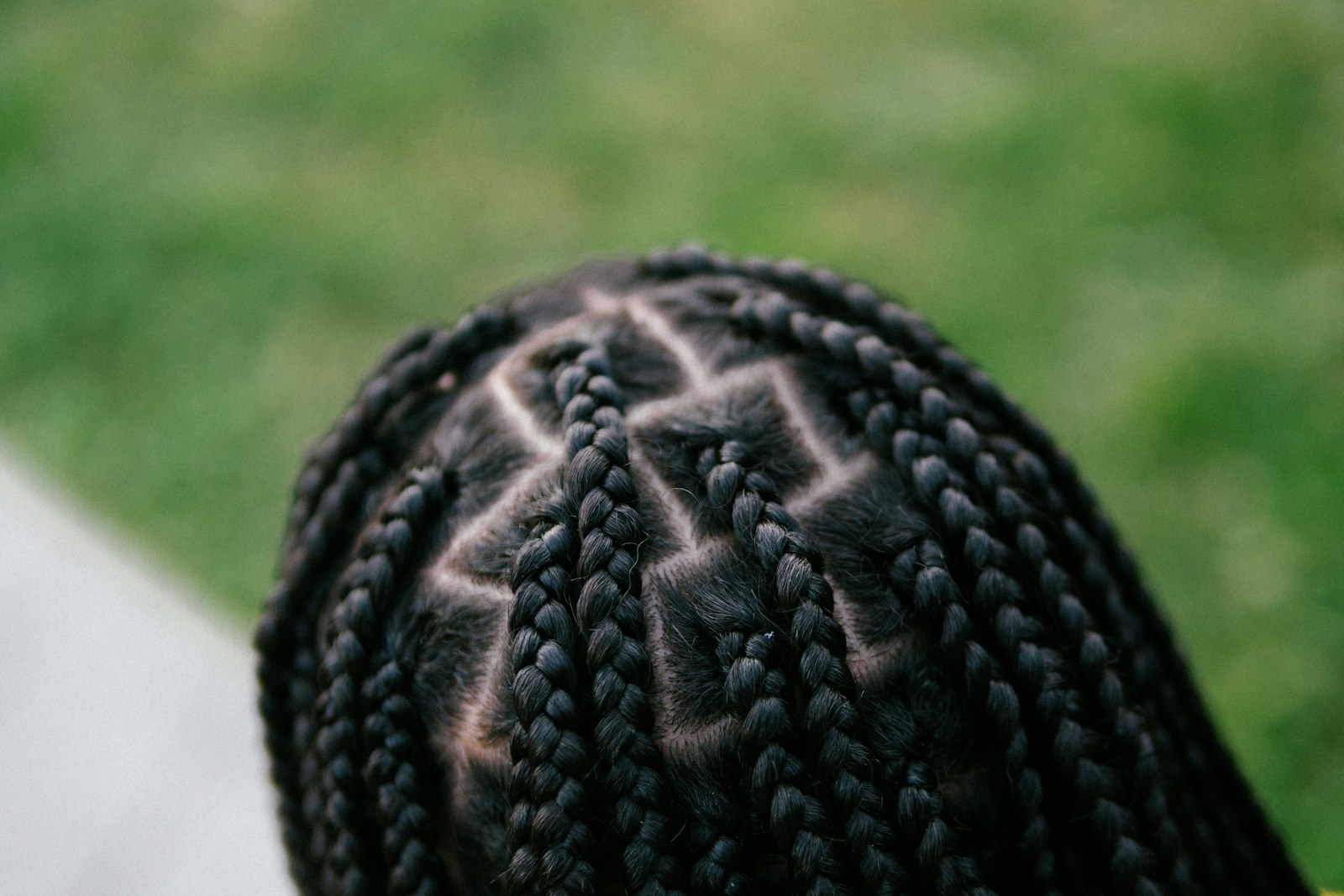
Do Braids Make Hair Grow Faster? What They Change, What They Do Not, and How to Reduce Breakage
Hair & Scalp Science
Do Braids Make Hair Grow Faster? What They Change, What They Do Not, and How to Reduce Breakage
Direct answer: Braiding does not make scalp follicles produce hair faster. A well-planned braid style may help some people retain visible length by reducing daily manipulation, but tight, heavy, frequent, or long-worn braids can increase shaft damage and traction on follicles. Growth, length retention, and breakage are different outcomes.
Why the claim sounds believable
Many people take braids down and see hair that appears longer. That observation is real, but the explanation is often wrong. Hair continues to emerge from follicles while it is braided. The braid also holds shed hairs until takedown and can reduce the number of times the hair is combed, brushed, restyled, or exposed to friction. If less length breaks away than usual, more of the new length remains visible.
That is length retention. It is not evidence that braiding accelerated follicle activity. A hairstyle acts on hair shafts and applies mechanical forces to the scalp. It does not create a proven signal that makes follicles grow faster.
Growth, retention, and density are not interchangeable
Follicle growth
New hair shaft is produced inside the follicle. Published anatomy references commonly describe average scalp-hair elongation near a third of a millimeter per day, with meaningful variation between people and over time. A braid does not change the biology enough to claim a faster rate.
Length retention
Retained length is the difference between new shaft produced and length lost through breakage or cutting. A lower-manipulation style can improve retention for one person if it reduces damaging handling. It can reduce retention for another person if installation, added weight, dryness, takedown, or repeated edge tension causes more breakage.
Density and shedding
Density describes how much hair is present in an area. Shedding releases whole hairs from follicles; breakage snaps the shaft. A pile of hair at takedown can include normally shed hairs that stayed trapped in the style, broken pieces, or both. The appearance alone cannot diagnose why hair was lost.
What research says about braiding and damage
A 2021 study of natural African hair compared frequent and occasional braiders using microscopy, cuticle cohesion, tensile testing, and a traction-alopecia score. Frequent braiders had thinner, weaker fibers, more cuticle damage, and higher traction scores. The study does not prove that every braid style causes the same outcome, but it directly challenges the idea that more braiding automatically protects hair.
Clinical literature on traction alopecia consistently identifies prolonged or repeated tension as the key hazard. Tight braids, long or heavy extensions, painful installation, and repeated stress at the same margins can injure follicles. Early traction-related loss may be reversible after tension stops. Long-standing injury can scar, making loss permanent.
At the same time, grooming itself can damage fragile shafts. The same 2021 study found increasing surface damage with repeated combing strokes. This matters because the decision is not simply braids versus no risk. The practical goal is to reduce the total mechanical load from installation, wear, maintenance, and takedown.
When braids may support length retention
Braids may be useful when they are installed without pain, sized to distribute weight, kept clean according to scalp and style needs, moisturized with methods the hair tolerates, protected from friction, and removed before matting or excessive buildup develops. A wearer who otherwise detangles aggressively every day may retain more length with a comfortable low-manipulation plan.
Benefits are most plausible at the shaft level. Braids can organize fibers and reduce some tangling. They can also give a person a predictable routine. Neither benefit proves increased growth rate or treatment of hair loss.
Signs a style is too tight
Pain is not proof that a braid style will last. Pain, stinging, scalp tenting, bumps, crusting, or a headache that eases when the style is loosened are warning signs. The American Academy of Dermatology advises loosening tight styles, especially at the hairline, and changing a style immediately when these problems appear.
Other concerns include broken hairs around the forehead, progressive thinning where tension is concentrated, shiny areas with fewer follicle openings, or repeated tenderness. Do not wait for a scheduled takedown when symptoms are developing.
A lower-tension braid plan
- Assess before installation. Do not braid over broken skin, significant inflammation, unexplained patches, or painful areas. Ask a dermatologist about active hair loss rather than using a style to conceal it.
- Agree on comfort. The wearer should be able to report tension during each section. A request to loosen is a safety instruction, not a challenge to technique.
- Protect the margins. Avoid using the finest or weakest hairs to support the greatest weight. Larger parts are not automatically safe, but very small edge sections carrying long extensions concentrate load.
- Limit weight and length. Added hair increases force. Choose a size and length the scalp can tolerate without continuous pulling.
- Avoid stacked tension. A braid that feels acceptable down may become uncomfortable in a tight ponytail or bun. Consider the planned ways it will be worn.
- Maintain without buildup. Use a cleansing and drying method appropriate for the scalp, hair, and added fiber. Product accumulation can make assessment and takedown harder.
- Remove deliberately. Cut only below the known natural-hair length, release extensions completely, and detangle shed hair in sections with adequate slip rather than rushing.
- Rotate the load. Repeating the same parting and edge tension can concentrate injury. Comfortable loose intervals allow the scalp and shafts to be observed.
What “protective style” should mean
Protective should describe the result, not the style name. A style is not protective when it causes pain, hides inflammation, prevents reasonable cleansing, adds more load than the hair can support, or requires damaging removal. The same braid pattern can be low risk for one wearer and high risk for another because fiber condition, density, length, added weight, technique, and duration differ.
Natural hair deserves advice that respects both cultural expression and biological limits. Braids can be practical, beautiful, and personally meaningful without being sold as a growth treatment.
Consumer guidance
Before an appointment, bring photos of previous styles and note any past soreness, bumps, edge thinning, or difficult takedown. Ask about added-hair weight, how comfort will be checked, cleansing access, expected wear, and the removal plan. During installation, speak up when a section hurts. Afterward, do not rely on pain relievers or tight headwear to tolerate a style.
Professional guidance
Record the wearer’s comfort, edge condition, added material, part size, attachment method, and any modification made during installation. A simple tension conversation at the start is not enough; recheck after several sections and after the finished style is moved. Teach signs that require prompt loosening or removal. Refer unexplained thinning, scarring, pustules, drainage, or persistent symptoms to an appropriate licensed clinician.
Frequently asked questions
Can braids make hair look thicker?
Added hair and organized sections can create a fuller cosmetic appearance. That is not an increase in follicle number or biological density.
Why does so much hair come out at takedown?
Normally shed hairs can remain held inside a long-worn style. Broken fibers may also be present. Persistent thinning, pain, smooth patches, or repeated loss in the same location needs professional evaluation.
Are knotless braids always safer?
No technique name guarantees low tension. Weight, part size, edge handling, installation force, length, styling after installation, and wear time still matter.
Should braids be left in as long as possible to grow hair?
No. A longer interval can increase buildup, tangling, matting, and cumulative tension. Follow an individualized maintenance and removal plan rather than a growth promise.
Can oils under braids speed growth?
Oils may change lubrication, shine, or moisture loss at the shaft and scalp surface, depending on the product. They are not proof of faster follicle growth, and fragranced or complex products can irritate some scalps.
Evidence and limits
- Molamodi et al., 2021: braiding, combing, and natural African hair integrity
- Billero and Miteva, 2018: traction alopecia review
- JAMA Dermatology patient page on traction alopecia
- American Academy of Dermatology: hairstyles that pull can lead to hair loss
- NCBI anatomy reference for normal hair growth
Most evidence addresses damage and traction risk rather than randomized comparisons of braid techniques. Individual results vary. This article does not diagnose hair loss or recommend medication. Sudden loss, scarring, significant inflammation, pain, drainage, or persistent thinning warrants evaluation by a qualified healthcare professional.
Next steps
For practical care routines, explore Tips & Tricks. Professionals can continue in THS ProGuides and education. Consumers seeking hands-on help can use the Hair Society salon directory.
Share This Story, Choose Your Platform!
Related Posts

What Does pH-Balanced Shampoo Actually Mean?
Gallery
What Does pH-Balanced Shampoo Actually Mean?
Can Scalp Massage Increase Hair Growth? What the Evidence Actually Shows
Gallery
Can Scalp Massage Increase Hair Growth? What the Evidence Actually Shows
Can Static Electricity Damage Hair or Mainly Change Manageability?
Gallery
Can Static Electricity Damage Hair or Mainly Change Manageability?

Does Swimming Pool Chlorine Damage Hair? What It Changes and How to Reduce Exposure
Gallery
Does Swimming Pool Chlorine Damage Hair? What It Changes and How to Reduce Exposure