
-
View Larger Image
Does Cold Weather Cause More Hair Shedding? What Seasonal Studies Actually Show
Hair & Scalp Science
Does Cold Weather Cause More Hair Shedding? What Seasonal Studies Actually Show
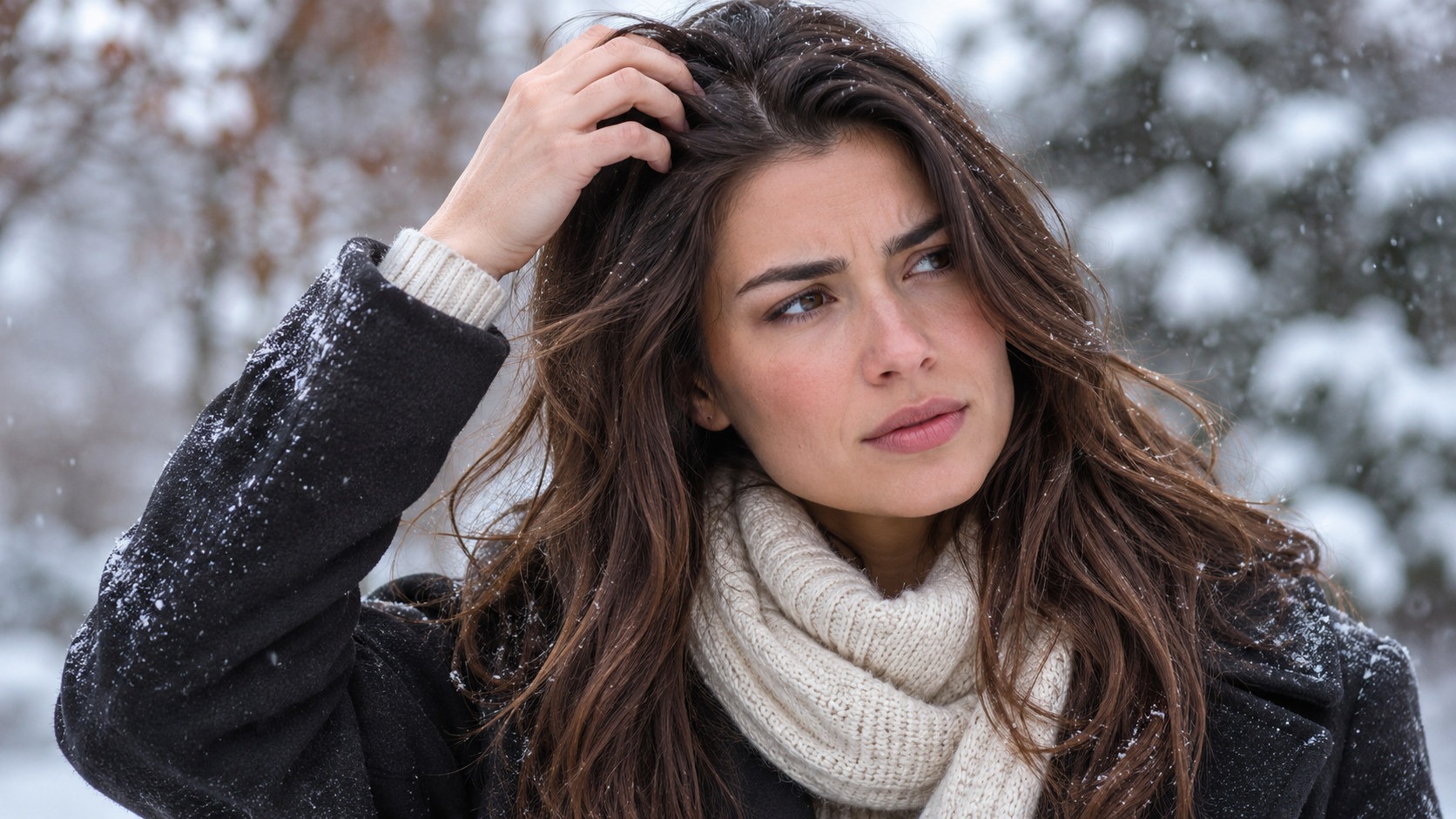
Direct answer: Cold weather itself has not been shown to directly cause a winter surge in scalp-hair shedding. Human studies do show seasonal variation, but the clearest shedding peaks have usually appeared in late summer or early autumn, while telogen measures were often lowest in late winter. A change noticed during cold months still deserves context because illness, stress, nutrition, traction, scalp disease, medication, and pattern hair loss can overlap with the calendar.
Why the simple cold-weather story is misleading
People often connect a fuller brush, more hair in the shower, or a thinner-looking style with the first cold weeks of the year. The timing feels persuasive. Yet timing alone cannot separate true shedding from breakage, altered grooming, tighter hats, drier indoor air, a recent illness, or simply seeing accumulated hairs after washing less often.
Hair follicles cycle through growth, transition, rest, and release. A hair that sheds today entered that process earlier. That delay matters. A trigger such as fever, surgery, childbirth, major weight change, or intense stress can produce noticeable shedding months later. The American Academy of Dermatology distinguishes excessive shedding from progressive hair loss and emphasizes that many causes can look similar without an examination.
Cold air can change how hair fibers feel and behave. Low humidity, friction from clothing, and indoor heating may increase static, roughness, tangling, and breakage. Those are fiber and handling effects. They are not proof that cold temperature pushed more follicles into a shedding phase.
What the seasonal studies actually found
A small long-term study of men
A 1991 study followed 14 healthy men with indoor occupations for 18 months. Investigators measured hair-growth variables every 28 days. The proportion of scalp follicles in anagen, the active growth phase, peaked in March and declined toward a September trough. Recorded shedding peaked around August and September, not in the coldest months. This study was detailed but small and limited to young adult Caucasian men in one U.K. city, so it cannot define a universal pattern.
Source: Randall and Ebling, Seasonal changes in human hair growth.
A larger retrospective series of women
A 2009 study analyzed trichograms from 823 apparently healthy women who had complained of hair loss after excluding recognized disease and drug causes. The proportion of telogen hairs showed annual periodicity, with a maximum in summer and a less pronounced second peak in spring. Telogen rates were lowest in late winter. This larger sample strengthens the observation that seasonality may exist, but it was retrospective and included people who had already sought evaluation for shedding.
Source: Kunz, Seifert, and Trüeb, Seasonality of hair shedding in healthy women complaining of hair loss.
Long observation and other climates
A separate report followed ten men for eight to fourteen years with phototrichograms and found an overall annual pattern with the highest telogen proportion near the end of summer and start of autumn. A retrospective Chilean series also reported seasonal differences in trichograms, although the calendar season reverses between hemispheres. These findings support periodicity, but they do not prove that outdoor temperature is the cause.
Sources: Courtois and colleagues, Periodicity in the growth and shedding of hair and Kahn and colleagues, seasonal variation in Chilean trichograms.
Search behavior is not follicle measurement
Population analyses of internet searches have found repeating seasonal interest in hair loss. A 2018 research letter reported more hair-loss searching in summer and autumn than spring across eight countries, and a 2023 analysis revisited seasonal search patterns. These studies are useful for public-interest signals. They do not measure individual shedding, and search volume cannot establish a biological cause.
Sources: Hsiang and colleagues, Seasonality of hair loss and Buontempo and colleagues, Seasonal trends in hair loss.
What the evidence does not establish
- It does not show that stepping into cold air directly causes follicles to release hair.
- It does not provide one normal monthly shedding count for every person, hair texture, climate, age, sex, or health history.
- It does not prove that a seasonal pattern is harmless in a specific individual.
- It does not distinguish shedding from breakage by counting loose fibers alone.
- It does not justify starting supplements, changing medication, or using a hair-loss treatment without identifying the cause.
The most defensible conclusion is narrow: measurable seasonal variation has appeared in several human datasets, often with late-summer or autumn peaks and lower winter telogen measures, but the mechanism and individual significance remain uncertain.
Why hair can look worse in winter even without more follicle shedding
Longer gaps between wash days
Loose hairs can remain caught among curls, coils, braids, extensions, or dense lengths until detangling or washing. If the interval between grooming sessions grows, the next session may release several days of naturally shed hairs at once. The pile is larger, but the daily rate may not be.
Breakage and friction
Scarves, coat collars, hats, rough pillowcases, and dry fibers can increase friction. Broken hairs may be shorter, may lack a visible bulb at one end, and may collect in the same brush as naturally released full-length hairs. This visual check is imperfect, but it helps frame better questions.
Static and altered styling
Low indoor humidity can increase static and change alignment. Hair that separates, tangles, or lies flatter at the root can make the scalp more visible. That is an appearance change, not proof of reduced follicle count.
Delayed effects of autumn illness or stress
Respiratory illness, fever, surgery, major weight change, or intense stress can precede excessive shedding by weeks or months. A winter observation may therefore reflect an earlier event rather than temperature.
A practical way to track a change without diagnosing yourself
- Keep the routine stable for two to four weeks. Record wash frequency, detangling method, protective styles, extensions, chemical services, and major product changes.
- Use consistent observation points. Compare the same part, hairline, or ponytail area under the same lighting and head position. Photographs can document appearance but cannot diagnose cause.
- Separate shedding from visible breakage when possible. Note whether loose fibers are mostly full length or include many short fragments. Do not pull hair to test it.
- Record relevant timing. Include illness, fever, surgery, childbirth, major stress, significant weight change, medication changes, scalp symptoms, or tight-style exposure from the preceding several months.
- Look for pattern, not a dramatic single wash day. A large collection after a long interval may be less informative than a sustained change across comparable sessions.
- Bring the record to a qualified clinician. A dermatologist can evaluate the scalp, pattern, history, and whether testing is warranted.
When not to blame the season
Seek professional evaluation when you notice a widening part, receding hairline, growing bald area, smooth patch, scalp pain, burning, redness, scale, pus, scarring, eyebrow loss, broken hairs concentrated in one area, or continued loss that does not fit your usual pattern. Sudden clumps, rapid thinning, or symptoms after a medication change deserve prompt attention. Do not stop a prescription medication on your own.
The American Academy of Dermatology overview explains that normal shedding and hair loss are different and that identifying the cause matters. Its signs and symptoms guide lists gradual and sudden presentations that warrant attention.
What consumers can do now
- Use gentle detangling and support the section rather than pulling through resistance.
- Reduce friction at coat collars and under hats, especially where hair is already fragile.
- Avoid increasing heat, chemical processing, or tight styling to make thinning look fuller.
- Do not take high-dose supplements simply because the calendar changed. Excess or unnecessary nutrients can create risks and may delay diagnosis.
- Keep medical treatment decisions with the prescribing clinician and dermatologist.
What salon and hair-replacement professionals should do
Professionals can document what they see without diagnosing. Ask neutral questions about timing, wash frequency, recent illness, major stressors, styling tension, and scalp symptoms. Distinguish cosmetic camouflage from medical treatment. Avoid declaring a seasonal shed normal when there is a new pattern, discomfort, inflammation, or progressive thinning. Encourage timely dermatology referral and keep the client’s own observations separate from professional conclusions.
For related practical guidance, see the Hair Society’s seven-day scalp comfort and washing log and phone-photo monitoring guide.
Frequently asked questions
Does wearing a winter hat cause seasonal shedding?
A properly fitted hat is not established as a cause of seasonal follicle shedding. A tight, rough, or repeatedly rubbing hat can contribute to friction, breakage, or traction. Pain is a sign to loosen or change the fit.
Is more hair in the shower automatically hair loss?
No. Wash interval, hair length, texture, detangling, and style can change how many already released hairs appear at once. Persistent change, visible thinning, or scalp symptoms deserve evaluation.
Should I count every shed hair?
Usually not. Exact home counts are time-consuming and easily distorted by routine. Consistent photos, wash intervals, symptoms, and pattern observations are often more useful to bring to a clinician.
Can cold air damage the hair fiber?
Cold season routines can coincide with low humidity, static, friction, and dry-feeling hair, but those fiber effects are different from medically diagnosed hair loss.
Can I assume autumn shedding will stop on its own?
No. Seasonal variation is a population observation, not a diagnosis. New or progressive loss should not be dismissed because it began in autumn.
The bottom line
Cold weather is an appealing explanation because it is visible and immediate. The research points elsewhere: several studies found seasonal hair-cycle variation, often with peak shedding or telogen measures in late summer or early autumn and lower levels in winter. That pattern does not prove a direct cold effect, and it cannot explain an individual case without context. Track comparable observations, protect the fiber from friction and breakage, and seek qualified evaluation when the pattern, scalp, or symptoms change.
Principal sources
- Randall VA, Ebling FJ. Seasonal changes in human hair growth. 1991.
- Kunz M, Seifert B, Trüeb RM. Seasonality of hair shedding in healthy women complaining of hair loss. 2009.
- Courtois M et al. Periodicity in the growth and shedding of hair. 1996.
- Hsiang EY et al. Seasonality of hair loss: a time series analysis. 2018.
- American Academy of Dermatology. Hair loss overview.
Share This Story, Choose Your Platform!
Related Posts
Can Scalp Massage Increase Hair Growth? What the Evidence Actually Shows
Gallery
Can Scalp Massage Increase Hair Growth? What the Evidence Actually Shows
Can Static Electricity Damage Hair or Mainly Change Manageability?
Gallery
Can Static Electricity Damage Hair or Mainly Change Manageability?

Does Swimming Pool Chlorine Damage Hair? What It Changes and How to Reduce Exposure
Gallery
Does Swimming Pool Chlorine Damage Hair? What It Changes and How to Reduce Exposure
Can Menopause Change Hair Texture as Well as Density?
Gallery
Can Menopause Change Hair Texture as Well as Density?